www.it-connect.fr

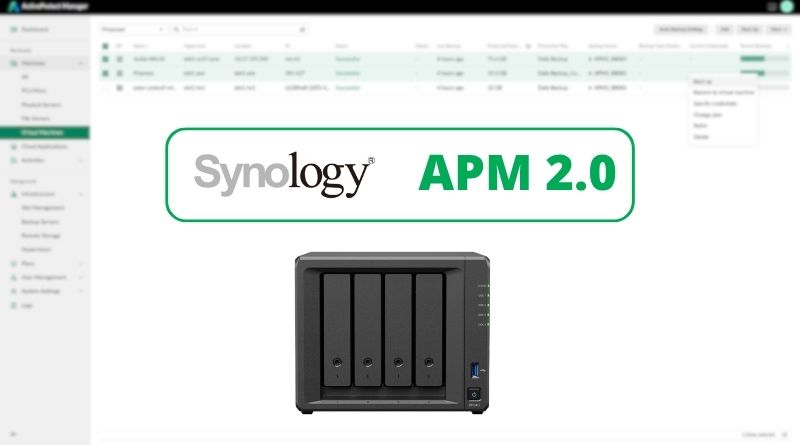
Synology APM 2.0 Expands to Proxmox, Nutanix and More
Synology released ActiveProtect Manager 2.0 (APM 2.0) this Friday, September 4, 2026, the major update to the system powering its backup appliances. On the menu: support for new platforms, including Proxmox VE. Here’s what you need to know.
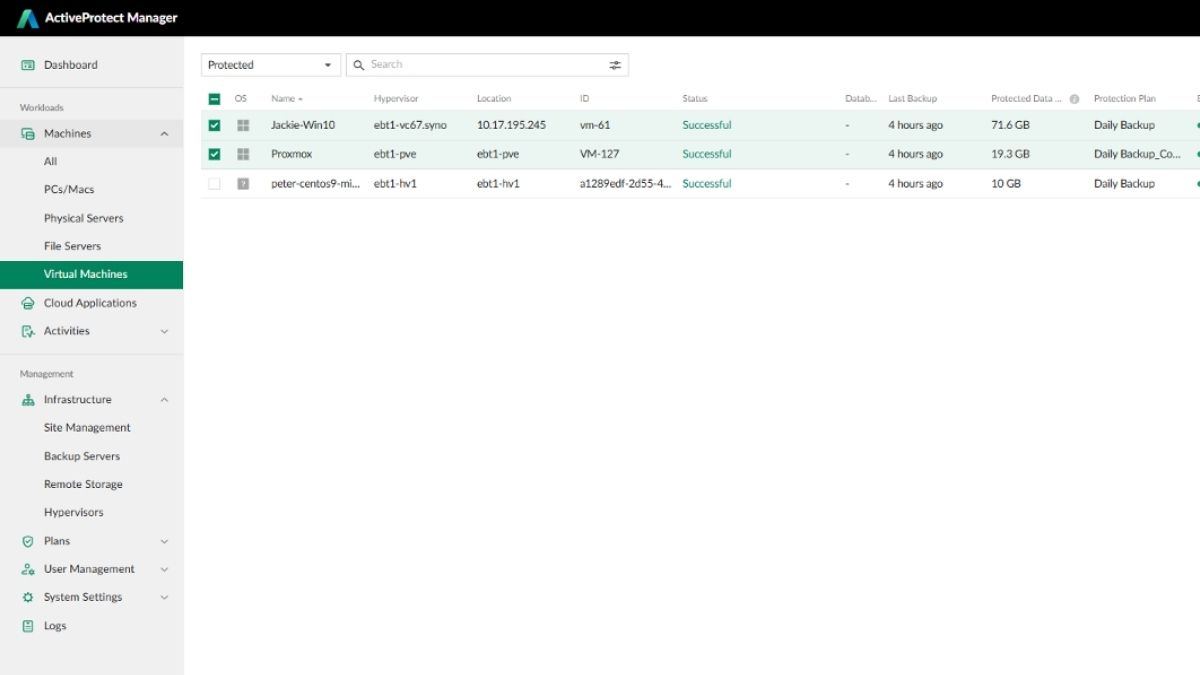
Let’s start with a quick reminder: ActiveProtect is Synology’s all-in-one backup appliance lineup, launched in early 2025. It comes in the form of boxes in the DP series (DP320, DP340, DP5200, etc.) that integrate storage and management software. Forget DSM used by the brand’s NAS devices. Here, Synology uses a variant called APM, for ActiveProtect Manager. The goal: protect workstations, physical servers, virtual machines, and Microsoft 365 data.
This 2.0 release was announced at Computex in June 2026, and it is now available. All DP appliances can benefit from it, at no additional cost. So, what’s new?
Broader coverage for the cloud, Proxmox and Nutanix
APM 2.0 is a major release because it adds backup support for five new platforms: Amazon EC2, Azure VM, Proxmox VE, Nutanix AHV, and Google Workspace. For a solution that had mainly focused on VMware, Hyper-V, and Microsoft 365 until now, this is a significant step forward. More importantly, it opens the door to other ecosystems, especially open source, with Proxmox VE backup support (whose adoption has kept growing since Broadcom’s pricing policy changes). In the process, Synology becomes an alternative to Proxmox Backup Server.
Restoration is now cross-platform as well. A workload backed up in one environment can be restored into another. This makes Virtual to Virtual and Physical to Virtual scenarios possible. Synology uses the acronyms V2V, C2V, V2C, and P2C depending on the type and direction of the transfer. In practice, this is useful for two use cases: disaster recovery and migrating from one hypervisor to another (for example, moving from VMware to Proxmox VE).
Another highlighted addition is direct cloud-to-cloud recovery. Backups stored on Amazon S3, Azure Blob Storage, or Wasabi can be restored to an Amazon EC2 instance or an Azure VM without going back through the on-premises appliance. “This significantly reduces recovery times,” Synology notes in its press release. This can help you build a cloud-based disaster recovery plan from an off-site backup.
Synology also mentions several other improvements in APM 2.0:
- SURE engine. The Synology Unified Reduction Engine combines Changed Block Tracking with global deduplication, both on the source side and on the server side.
- Temporary instances. To back up Amazon EC2 and Azure VM, APM launches ephemeral working instances in the cloud, paired with source-side deduplication, to limit transfers and egress costs.
- Monitoring. SNMP alerts can now be sent to Zabbix and Splunk for hardware status, backups, restorations, and system events.
Encryption now, AI later
APM 2.0 introduces software-based volume encryption, with keys stored locally on the appliance. The goal is to protect data at rest: if a disk is stolen or the hardware is lost, backups and configurations remain unreadable. As for AI, you’ll have to wait.
At Computex, Synology had presented AI-based anomaly detection and antivirus scanning of backups as APM 2.0 features. Those two additions have been pushed back and will arrive in a future update: APM 2.1. This future version will analyze each backup version (change rate, mass deletions, abnormal entropy) and quarantine suspicious copies. It will also integrate third-party antivirus engines, Microsoft Defender, Bitdefender, and ESET, to scan a backup before restoration, with an Auto Fallback feature that will automatically roll back to the last known good version if malware is detected.
More information here: ActiveProtect product page.
What do you think?