www.it-connect.fr

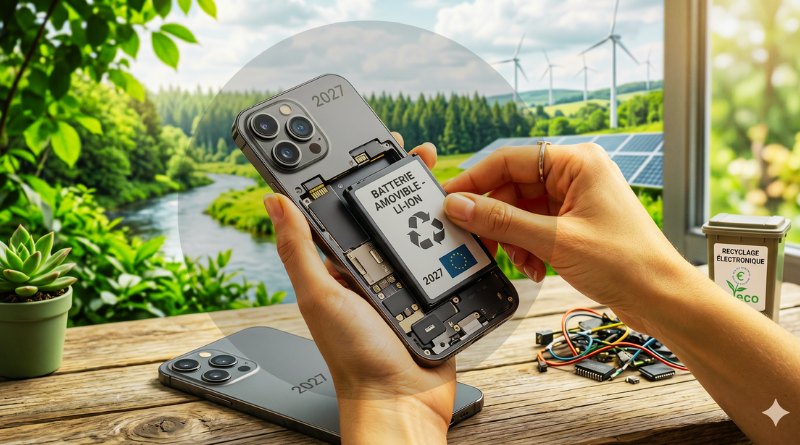
EU to Mandate Removable Smartphone Batteries by 2027, With Key Exceptions
Starting in February 2027, a new European regulation is set to shake up the market by bringing removable batteries back to our smartphones. A shift, but one that comes with exceptions allowing certain models to bypass the new rules.
Toward more accessible components
The European Union has made its decision with the new regulation (EU) 2023/1542. By February 18, 2027, smartphones sold in Europe will have to abandon the "monobloc" design in favor of more accessible components. Anyone must be able to remove and replace the battery in their smartphone without needing a professional repair toolkit. Forget solvents, forget the trick of heating the back of the phone to peel it off... It must be simpler and more accessible with everyday tools.
This decision was made to help extend smartphone lifespans. It is therefore an environmental measure. At the same time, in 2026, battery wear remains the number one reason we replace our phones. Simplifying battery replacement could therefore extend a smartphone’s life by a few more years, especially if the device is still supported in software by the manufacturer.
For consumers, this is a plus: you would simply order a new battery and replace it. The cost of the operation would therefore be significantly reduced.
Which models are affected?
On paper, all models are affected: Xiaomi, Samsung, Oppo, and even Apple devices, including the iPhone. That is likely to make some people unhappy, especially since these manufacturers have spent years trying to create ever-thinner devices with highly optimized designs. Complying with this regulation will inevitably affect smartphone design (thickness? water resistance?) in order to make the process easier.
The reality may be very different. I would even say that there may never be a removable battery on the iPhone. In any case, not as simply as the European Union intends. I say this because there is an escape hatch that should benefit some brands, and more specifically, certain models.
In 2027, Samsung, Apple, and others will be able to keep a fully sealed battery if they can meet two very specific criteria:
- Exceptional endurance: the battery must be capable of withstanding at least 1,000 full charge cycles while retaining 80% of its original capacity.
- Water resistance certification: the smartphone must have at least an IP67 rating for smartphones (guaranteeing complete protection against dust and resistance to immersion at 1 meter for 30 minutes).
Europe is giving brands the option to choose, but the specified number of battery cycles is really high. Brands therefore have two choices: either devices become openable, or they become examples of longevity... In reality, premium models could escape the rule, unlike entry-level ones.
Finally, the European Union document also mentions the creation of a battery passport. "The battery passport contains information relating to the battery model and specific information about the battery in question.", it reads. This is intended in particular to provide details on the exact composition of the battery.
Good idea or bad idea, in your opinion?