www.it-connect.fr

Tor Browser 16.0 Upgrades to Firefox ESR 153, Adds Linux ARM64 Support, and Can Hide Window Titles
Tor Browser 16.0 is now available, and this new release brings the move to Firefox ESR 153, along with the arrival of a Linux ARM64 build. Here’s what you need to know about this new version.
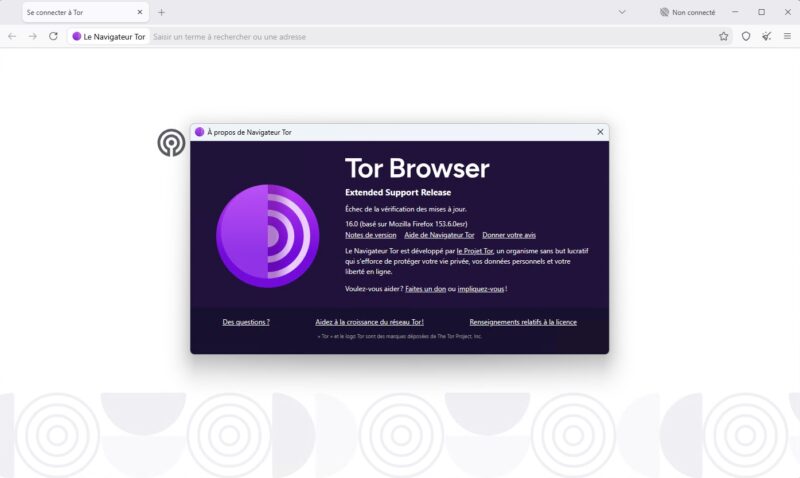
The Tor Project released Tor Browser 16.0 on October 29, 2026, for Windows, macOS, Linux, and Android. According to the Tor Project’s official announcement, this is the first stable release based on Firefox ESR 153 (153.6.0esr to be exact).
As a reminder, Mozilla Firefox’s ESR branch is primarily aimed at businesses, as it focuses on stability and security rather than shipping new features. Meanwhile, the main version of Firefox now gets a new release every two weeks. Tor Browser follows the ESR cadence, and each transition is a major undertaking.
This year, the Tor Browser team reviewed more than 270 Bugzilla tickets, representing as many Firefox changes that could potentially affect user privacy or security. That leads the Tor Browser team to make case-by-case decisions, including WebGPU, which will remain disabled until it has been audited. The same applies to the settings panel dedicated to AI, which will be hidden on desktop. In other words, Tor Browser inherits Firefox, but it filters it.
A Redesigned Settings Experience and Anonymous Window Titles
The most important new feature in Tor Browser itself is the complete overhaul of its settings, modeled on the redesign Mozilla rolled out in Firefox in June. In short:
- General page removed: its content has been split across new Appearance, Downloads, Tabs and browsing, Accessibility, and Languages pages.
- Connection and Security Level rebuilt: these Tor Browser-specific pages have been rewritten using Firefox’s new components.
- Risky settings flagged: options that could compromise anonymity or make fingerprinting easier are hidden or accompanied by a warning.
- Preferences preserved: your existing settings are kept, even if the option has moved.
Tor Browser 16.0 also includes a new Tor-specific feature: generic window titles. As you probably know, browsers normally use the title of the page you’re viewing as the title of their window. However, this information can be read by other applications and by the operating system, with no special permission required. If you enable this new option, all windows are renamed to "Tor Browser".
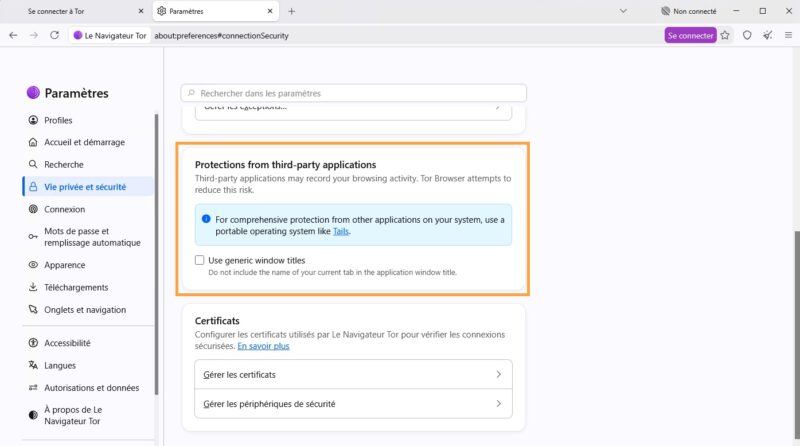
However, this option remains disabled by default. "We did not have enough time during this release cycle to properly assess the potential side effects for users.", the Tor Project acknowledges.
Linux ARM64 Arrives, Linux 32-bit Is Dropped
After about a year of testing, Tor Browser 16.0 now natively supports Linux on 64-bit ARM processors (AArch64). This includes Raspberry Pi devices and Apple Silicon Macs running Linux. There is now a stable release for these machines. On the other hand, Tor Browser 16.0 follows Firefox’s lead and drops Linux 32-bit (x86).
On Android, much of the interface is moving to Material Design 3, following Firefox’s migration to Jetpack Compose. The team also compressed certain resources to stay under the 100 MB limit imposed by Google Play for APKs.
What’s next is already on the roadmap: a new circuit view is coming soon to Tor Browser (Alpha), capable of representing multi-path circuits.
What do you think?