www.it-connect.fr

OpenAI Launches dots, the AI Agent That Works While You Sleep
An AI agent that works day and night on its own computer in the cloud, and does not necessarily wait for your request before getting to work. That is the promise behind what OpenAI calls dots. Here is what we know about this new feature unveiled at DevDay 2026.
On Tuesday, September 29, 2026, during its DevDay conference in San Francisco, OpenAI unveiled dots, its new "always-on" AI agents integrated into ChatGPT. They are powered by GPT-6 Astra, OpenAI's most capable model available to the general public, now accompanied by GPT-6.1 Sol.
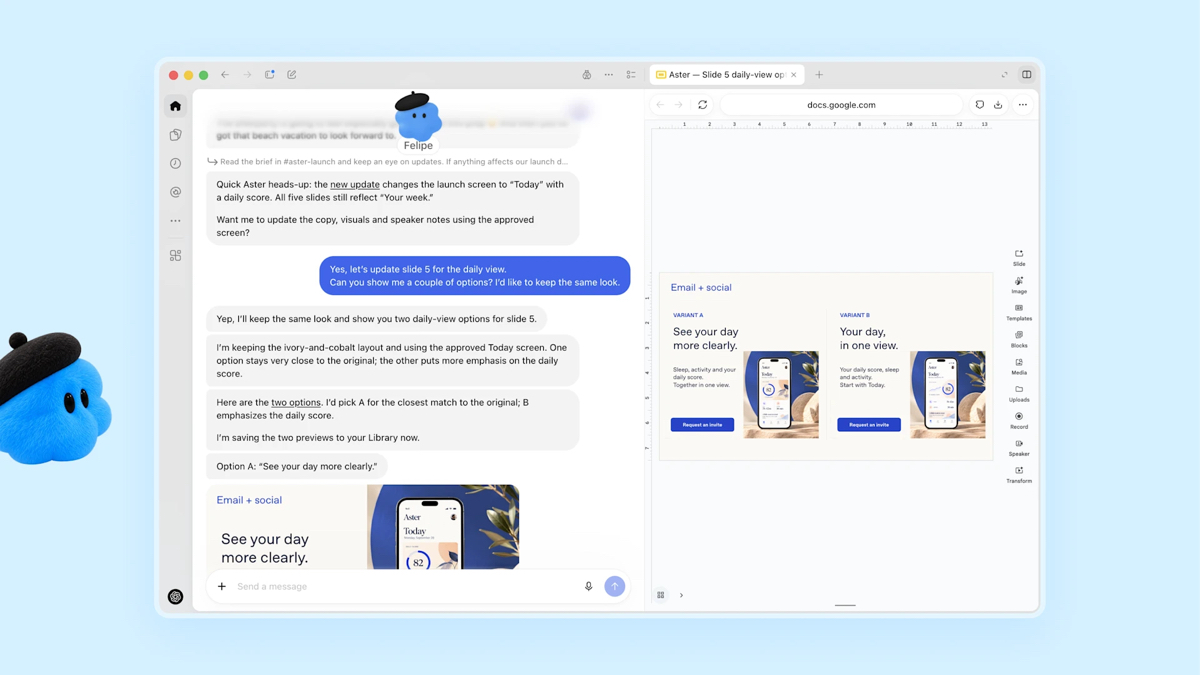
In practice, each dot has its own computer in the cloud, and therefore its own browser, and it can connect to more than 4,000 applications via plugins. You can write to it or call it from ChatGPT, but also from other services such as Slack and Teams. That said, it is not limited to its Cloud environment, because if you allow it, it can also operate your computer.
The difference from a classic AI agent is its proactive side. When you are not asking it to do anything, your dot looks for ways it could help you by scanning information in connected applications. At OpenAI, this is called proactive search.
"One of the first testers' dots noticed that he had forgotten to invoice a publication, prepared the invoice, and sent it after his approval", the announcement reads. Handy... as long as you give it access to your inbox. But it's so cute, we can trust it, right?
Who can use dots? Not Pro subscribers in France
OpenAI's dots are already rolling out, but not everywhere! According to OpenAI's help page dedicated to dots, availability depends on your subscription and your geographic location. In short:
- ChatGPT Pro : available, except in the European Economic Area, Switzerland, and the United Kingdom.
- ChatGPT Business Premium : available in all regions where ChatGPT is offered.
- ChatGPT Enterprise, Edu and Healthcare : beta access, disabled by default and enabled by the workspace administrator.
So in France, you need at least a €103 per month subscription to get a dot. The first dot is included at no extra cost in Pro and Business Premium subscriptions. "It is available 24/7 to chat, help you think through things, and keep track of what matters to you. Your plan also includes a quota for deeper tasks, with extended limits during the first month after launch.", OpenAI says.
What safeguards are in place for an agent that acts on its own?
The potential effectiveness of such a tool depends heavily on what it can access: the closer its access is to yours, the more likely it is to help you. But that also raises other issues, especially around information security. OpenAI is aware of this, which is why a dedicated article on dots security has been published.
Here are the main mechanisms mentioned:
- Read-only proactive search : background tasks use read-only tools only. They cannot send messages, modify application content, or control a browser.
- Secure sign-in : passwords go through an encrypted credential service, without passing through the model's context. However, a secret placed inside a document or message remains readable by the model: that is your responsibility.
- Auto-review : a separate system checks every email sent or file change according to your instructions, your custom rules, and security requirements. The dot cannot disable it.
- Human-only actions : permanent data deletion or installing software from an unknown source require confirmation every time. The same applies to sensitive operations such as making a bank transfer.
Another point to keep in mind when managing dots: disconnecting an application does not erase what the dot has already learned from it. Only resetting the dot, meaning deleting it, removes that information. "Dots can still make mistakes, so always verify important work", OpenAI warns.
Specialized dots, with Microsoft Agent 365 in sight
OpenAI is also previewing specialized dots. Each one is assigned its own identity, credentials, and access rights by the company to carry out a specific mission. This is not unlike work done by Microsoft. And, in fact, OpenAI is working with Microsoft to integrate these dots into Agent 365 governance and security controls.
Microsoft is also pushing its own vision with Autopilot, the always-on agent in the new Copilot with its own identity in your tenant. In both cases, it is one more non-human identity for IT to govern.