www.it-connect.fr

OpenAI Engineer Arrested Over Hidden Recorder in Executive Meeting Room
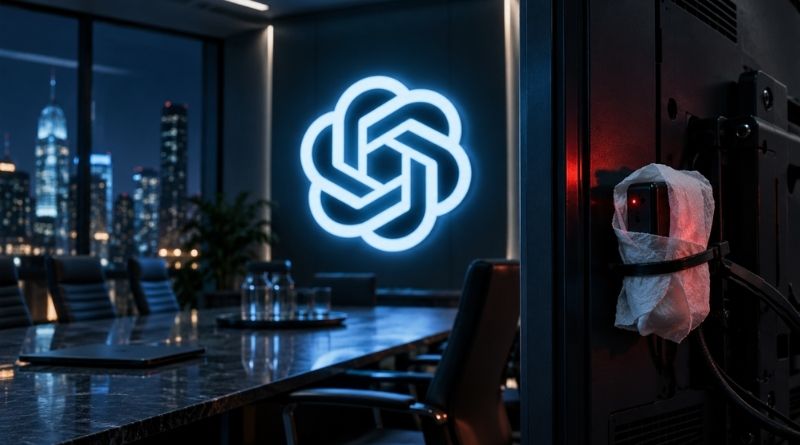
A hidden recorder wrapped in toilet paper and tucked behind the TV in an OpenAI executive meeting room. The engineer suspected of planting it has been arrested. Here’s what we know.
On October 13, 2026, the U.S. Department of Justice announced the arrest of an OpenAI engineer: Abdulrahman Alfozan, a 35-year-old Saudi national employed by the company since July 2025. Arrested on October 9, he appeared in federal court for the first time on October 13. He is charged with using, or attempting to use, a device intended to intercept oral communications.
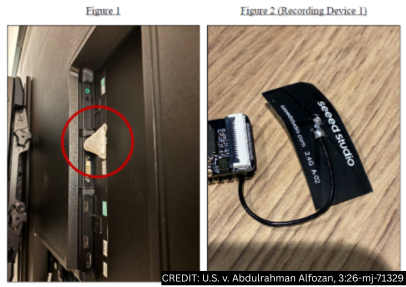
According to the complaint, OpenAI teams discovered the device around September 30 in one of the company’s buildings in San Francisco. It was plugged into a USB port at the back of a television installed in an executive conference room. Wrapped in toilet paper, it is believed to have been placed there around September 28, and its contents were encrypted.
If he chose this room, it was no accident: it plays a strategic role for OpenAI. The room regularly hosts discussions about proprietary research, product plans, business relationships, and even exchanges with governments.
A case built on digital traces
Abdulrahman Alfozan had no authorization to access that room or to attend the meetings held there. Yet surveillance footage reportedly shows him near the area several times before the device was discovered. More importantly, he was identified through digital traces left all over the place.
- Location scouting via mapping: before September 28, he reportedly searched extensively for building addresses, meeting rooms, their capacities and schedules, the whereabouts of executives, and meetings with external partners.
- Chatbot account: between September 24 and 30, an account associated with his wife, which shared several identifiers and attributes with the engineer’s account, reportedly submitted prompts about building a continuous audio recorder, Wi-Fi connectivity, live listening, concealment, remote access, and SD card encryption.
- Hardware identifiers: on September 27 and 28, that same account reportedly asked questions specifically about the device found, mentioning its custom header and MAC address.
- Returning to the scene: on October 5, surveillance footage captured him entering the room and peeking behind the television. That same day, OpenAI security opened a bag he had left unattended in another room. Inside: his wallet, his ID card... and a second recorder, similar to the first (how to blow your cover in 2 minutes...).
OpenAI investigated with its own models
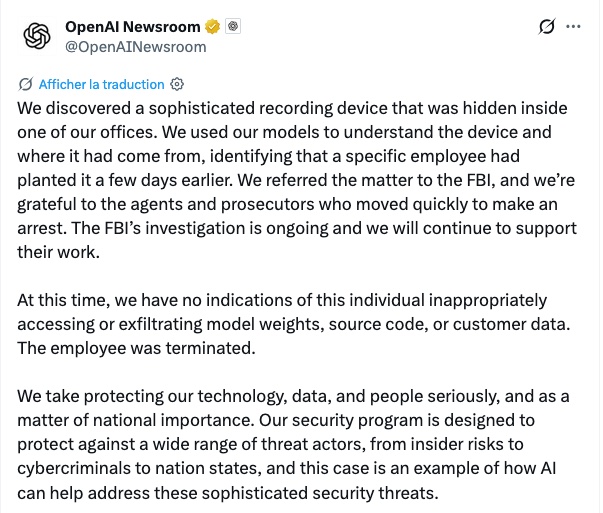
For its part, OpenAI responded on October 13 on its OpenAI Newsroom account on X. The U.S. company says it identified the employee a few days after the device was planted, then handed the case over to the FBI. "We used our models to understand the device and where it came from", OpenAI said, without detailing the models or methods used.
Abdulrahman Alfozan was fired by OpenAI; the remaining question is whether he managed to exfiltrate any information. If so, on whose behalf? For what purpose? FBI Director Kash Patel says that "the FBI considers this mission one of its highest counterintelligence priorities". However, the statement identifies no foreign sponsor and does not claim the engineer acted on behalf of Saudi Arabia. His nationality appears in the headline, but nothing more.
If Abdulrahman Alfozan is convicted, he now faces up to 5 years in prison, a $250,000 fine, and 3 years of supervised release. The FBI investigation is ongoing, and the allegations will still have to be proven in U.S. court.