www.it-connect.fr

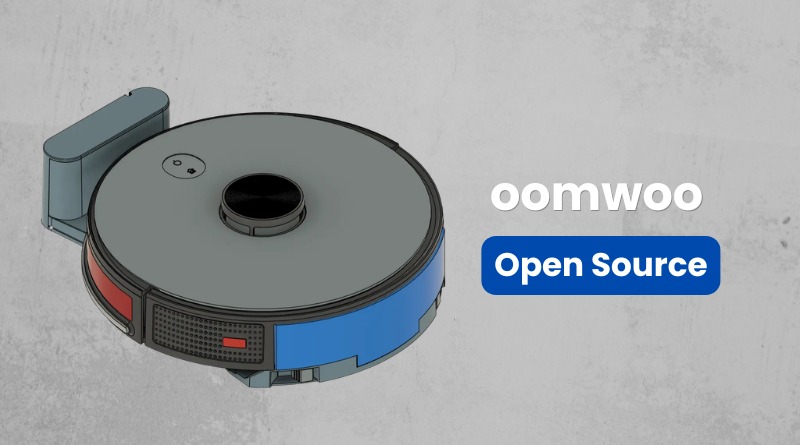
oomwoo: the open-source robot vacuum you can 3D print and build yourself, cloud-free
What if your next robot vacuum came straight out of your 3D printer? That is exactly the idea behind oomwoo, a project launched in mid-June 2026 by developer Ilia O. as part of his Maker's Pet series. Hardware, firmware, software: everything is open source, and the machine runs locally without ever relying on the cloud.
Open source from the body shell to the code
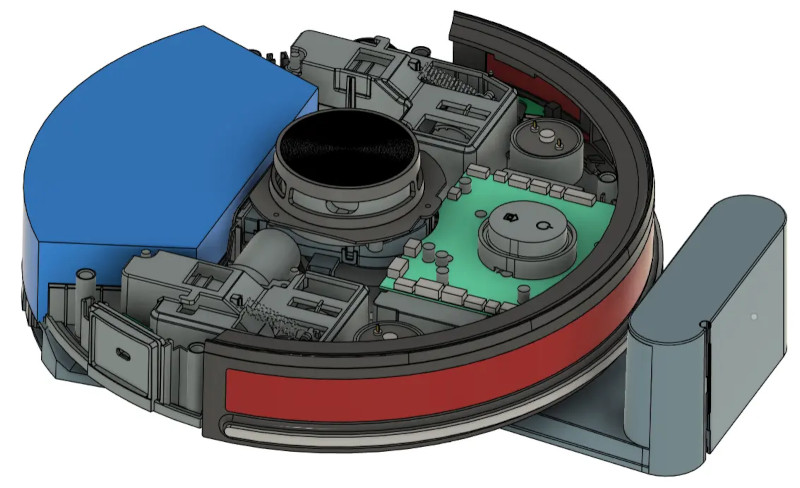
The concept is simple: the robot maps your home with a low-cost 2D LiDAR, then moves around on its own thanks to ROS 2 and the Nav2 stack, all natively controlled from Home Assistant. The chassis? 3D-printable, documented, and designed to be repaired. Even though this is a DIY project and a robot vacuum you build yourself, it is not a disposable gadget. It is built to last.
As for licensing, the code is released under the Apache License 2.0. A small detail that typography fans will appreciate: oomwoo is a rotational ambigram, meaning it reads the same when turned 180 degrees, just like the robot that spins all over your floor. Honestly, nicely done.
And for those who do not want to spend time hunting down components, a kit (motors, PCB, brushes, seals, LiDAR) will be available on makerspet.com. Optional, of course: you can source everything yourself, including on AliExpress, to optimize costs. Cloud features and a future ROS 2 app store (powered by remake.ai) will sit on top of the stack, but the core will not change: according to the developer, the vacuum will remain 100% local out of the box. Where most robots rely on cloud services, that is a real difference.
What about the budget? That is another major distinction, because the parts are expected to cost between 90 and 170 euros, plus a Raspberry Pi 5 with 4 GB of RAM (130 euros at that memory level). That brings the total to a maximum of 300 euros. At that price, you get something meant to challenge a commercially sold vacuum that typically costs around 500 euros.
A project that is still under construction
oomwoo is still in its very early stages. It is still just a draft. There is no assembly guide yet. The first milestone, v0, aims for a minimal but working build:
- A 3D-printed chassis,
- A simulation in the Gazebo engine,
- Manual
SLAMmapping via the LiDAR, - ROS 2 running on a Raspberry Pi 5 and/or an ESP32 with micro-ROS.
There is still quite a bit of work left on the stack: a complete parts list, 3D print files, firmware, a motors + sensors PCB, assembly and troubleshooting documentation, and demo videos. A first BOM is expected around mid-July.
What makes the project smart is how it is split up: the robot and the software are divided into independent modules, and the community can work on them in parallel. That is also important for what comes next, namely variants with multiple robots while keeping the same software layer.
"Cloud-free" is a real selling point
The local-first approach is a genuine advantage. Especially since in recent years there have been several security incidents involving these devices. At DEF CON 32 in August 2024, researchers Dennis Giese and Braelynn Luedtke demonstrated that several Ecovacs models could be hijacked over Bluetooth to access their cameras and microphones. More recently, a flaw in DJI's Romo line allegedly allowed a tinkerer to reach about 6,700 vacuums worldwide, including floor plans and live video streams.
Against that backdrop, there was already a workaround for the tech crowd: flash a retail vacuum with an alternative firmware such as Valetudo, maintained since 2018 by Sören Beye and also released under Apache 2.0. The catch is that this requires rooting the original firmware, just like on other devices. And that process, incidentally, voids the warranty.
oomwoo, on the other hand, tackles the problem at the source: it starts from a blank slate. Its reference design navigates only with 2D LiDAR and contact sensors, with no camera at all, which is a plus for privacy. The attack surface involved in the previous cases? Gone. This philosophy is not isolated: it is part of the broader wave of open home automation projects such as Homebridge 2.0, which now includes the Matter standard to break free from proprietary apps.
The million-dollar question remains: will a project this ambitious, community-driven, and still undocumented actually make it to completion? We will know in the coming months... In the meantime, here are a few resources if you want to dig deeper: