www.it-connect.fr

macOS 27 Golden Gate Drops Intel Macs and Debuts Siri AI
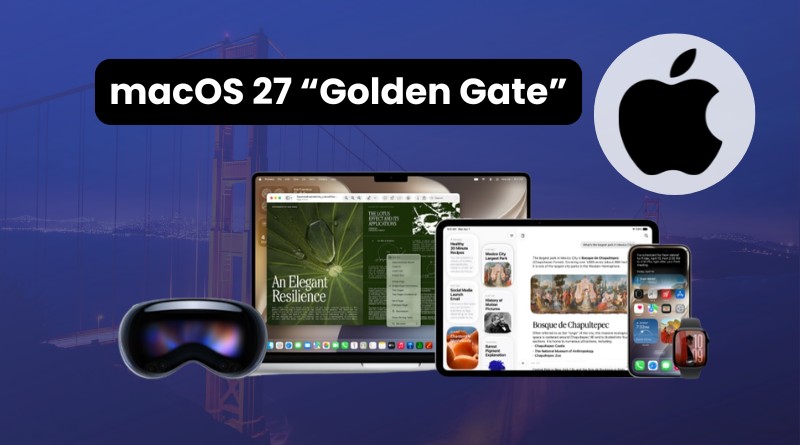
At WWDC 2026, Apple unveiled macOS 27, codenamed Golden Gate. This major new release marks a turning point: Mac computers with Intel processors will not be able to run it, making this version exclusive to the Apple Silicon platform. What are the key new features? Here’s what you need to know.
Intel’s Definitive Farewell for macOS
With macOS 27 Golden Gate, Apple is closing a chapter: the Intel processor era. The new operating system now requires an Apple Silicon chip, which means the last four Intel models still compatible with macOS 26 Tahoe are no longer supported:
- The 2019 16-inch MacBook Pro
- The 2020 13-inch MacBook Pro
- The 2020 iMac
- The 2019 Mac Pro
That said, Apple is not leaving these users behind. The Cupertino company has committed to providing security updates for these Intel machines through 2029. However, macOS will no longer gain new features, which will continue to arrive on macOS 26 Tahoe.
The new version, macOS 27 Golden Gate, is compatible with all models featuring Apple Silicon chips: M1, M2, and so on, up to the latest generations. The following models will therefore be supported:
- MacBook Neo (2026 and later),
- MacBook Air with Apple Silicon chip (2020 and later),
- MacBook Pro with Apple Silicon chip (2020 and later),
- Mac mini with Apple Silicon chip (2020 and later),
- iMac with Apple Silicon chip (2021 and later), Mac Studio (2022 and later)
- Mac Pro with Apple Silicon chip (2023).
Apple is making this change in part to prepare for Siri AI. To access the advanced features of the future Siri AI, Apple will require an even stricter configuration: at least an M3 chip and 12 GB of RAM. A decision that leaves the MacBook Neo out.
Siri AI: A Breakthrough Powered by Google Gemini and Apple Intelligence
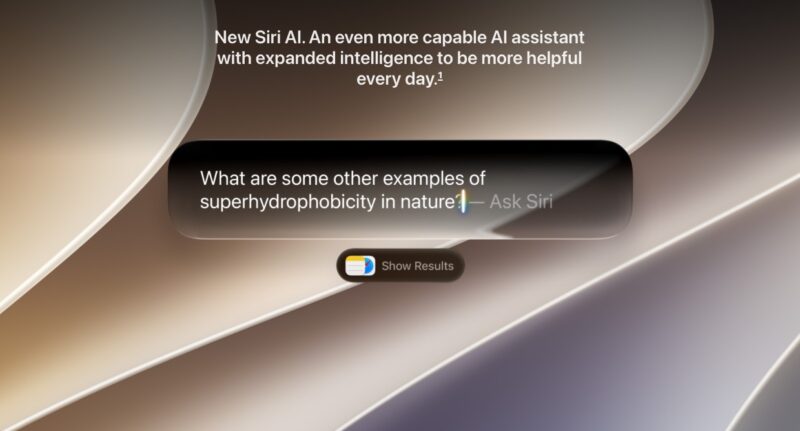
Since this is a major new macOS release, Apple has of course planned new features. This time, the star is Siri AI. It is a complete overhaul of Apple’s voice assistant, and its AI capabilities will rely on tools from... Google! In fact, Apple and Google have formed a partnership so that Google’s AI, especially Gemini models, can power Siri AI (with Apple’s servers ensuring privacy).
Siri AI promises more natural and more accurate conversations. The AI assistant will be able to draw simultaneously on web knowledge and the user’s personal context, including items displayed on screen. Among the other notable additions are:
- The ability to perform actions in many applications.
- A more accurate cross-app voice dictation feature.
- The ability to write text in almost any app using voice input.
- An integrated Spotlight assistant, reducing the need to open the dedicated Siri app to ask questions.
- Direct access to Siri AI actions through Mac and iPad right-click context menus.
- Advanced image editing.
"Siri’s AI can find relevant answers to your questions—just ask. Search for a photo from years ago, easily find an email buried in your inbox, or display a note you saved on your Mac.", Apple says.
Any Special Considerations for the European Union?
As soon as macOS 27 Golden Gate is released (scheduled for this fall), the new Siri AI assistant will be available! However, that will not be the case for Siri AI on iPhone and iPad: you will not be able to use it as soon as iOS 27 is released. The reason: the Digital Market Act (DMA) is disrupting Apple’s plans, and the two sides have failed to reach an agreement. The DMA aims to force Apple to open its device to other AI assistants, which would require unlocking access to data, something Apple refuses to do. The result: no Siri AI on iPhone and iPad at first.
An article published by Apple also addresses this issue: "Given the significant risks to users, Apple designed a solution called Trusted System Agent: an intermediary that would allow virtual assistants to securely access the same features and capabilities as Siri AI for devices in the EU. Apple also presented its strategy to introduce Siri AI in the EU while rolling out this new solution gradually over a period of 18 months. The European Commission opposed this. In fact, the European Commission rejected all of Apple’s proposals."
Finally, introduced with macOS 26 Tahoe, the "Liquid Glass" interface design gets several fixes in macOS 27, notably to make it more consistent across the system. If you want to learn more about the new features (there are more than those covered in this article), check out Apple’s website.
What do you think?