www.it-connect.fr

iodéOS: The French Android Alternative That De-Googles and Puts Privacy First
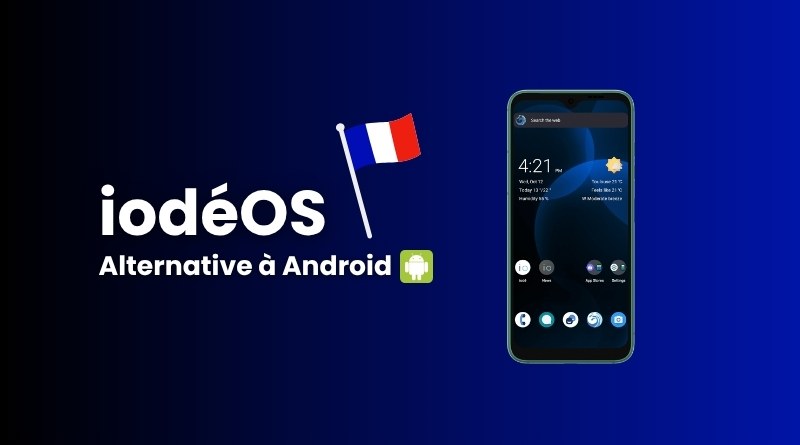
iodéOS is the name of an open source mobile operating system developed by the French company iodé. Like other alternatives, its goal is twofold: reduce your dependence on Google and improve your privacy.
iodéOS: an OS without Google services
iodéOS is an operating system based on LineageOS, which has succeeded CyanogenMod for several years. I have not personally tested this mobile operating system, but here is a summary of the information I have gathered on the web about it.
Getting started with iodéOS does not require an account, and above all, the system is not cluttered with all the apps Google integrates into Android. Most importantly, all preinstalled apps (yes, there are a few) can be easily uninstalled. The first question that comes to mind is this: how do you download apps without the Google Play Store?
This system relies on two alternatives for downloading apps:
- F-Droid : the catalog entirely dedicated to free and open source apps, which you probably know at least by name.
- Aurora Store : an anonymized interface that gives unrestricted access to apps from the Google Play Store, without needing to authenticate with a Google account.
Among the preinstalled apps, there are of course the two third-party app stores, but also Thunderbird for email, iodé Browser, a web browser based on Firefox, and CoMaps Navigation & Maps for GPS features (an app based on OpenStreetMaps). There are also a few elements inherited from LineageOS, such as the camera app called Aperture Camera.
iodéOS also integrates MicroG, an open source implementation of Google Play services, which notably allows apps to send notifications and use location services. What stands out is that the preinstalled apps are privacy-friendly and open source.
In general, iodéOS has chosen to remain compatible with most common apps (banking apps, social networks, and even Google Maps, which works without connecting to an account). The goal is to offer a solution accessible to the general public.
Protections against tracking
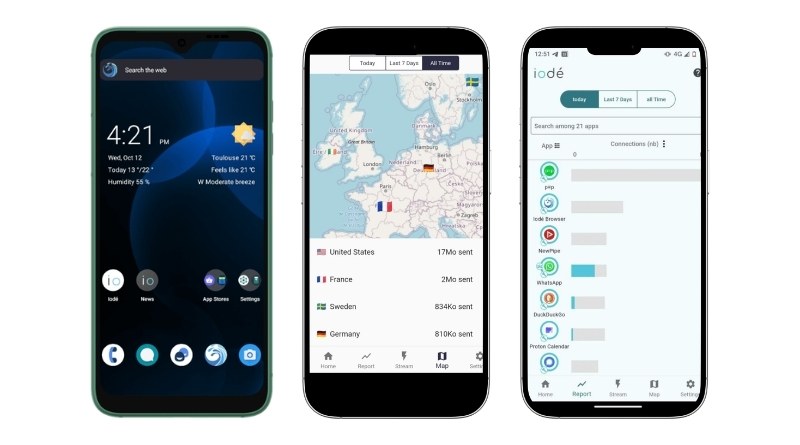
By default and natively, iodéOS can block unwanted traffic: telemetry, ads, trackers, and more. This makes it possible to clean up network traffic regardless of the apps you install on your smartphone. The blocking service developed by Iodé acts as a "man-in-the-middle" in the communication flow, so it can filter unwanted connections.
"We never collect data related to your smartphone activity.", we can read on the Iodé website. That same page refers to the use of blocklists (such as StevenBlack's). Users can select categories of content to block and therefore customize protection.
There is also a native, privacy-friendly parental control feature built into iodéOS. "iodéOS analyzes the identity of recipients in real time, the amount of data they want to collect, and shows you on an interactive world map where your data is being sent.", we can read.
Which smartphones are compatible?
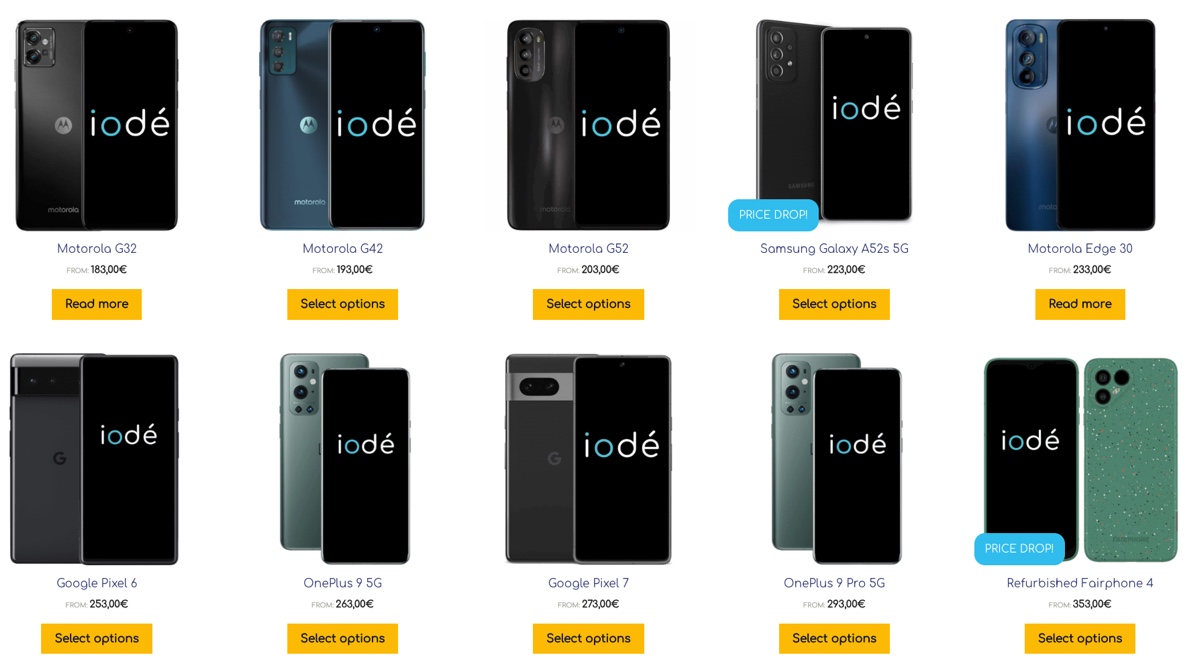
Compared with GrapheneOS , which is limited to Google Pixel devices (while waiting for those designed in partnership with Motorola), iodéOS takes a different approach. There is an online store where you can buy smartphones running iodéOS. They will not be the latest models, but that is not the point! This system is offered on refurbished smartphones, a relevant approach to fighting electronic waste by extending the life of hardware.
You will find Motorola, Samsung, Google, and OnePlus models. There are models of varying ages, from 2017 to 2025. You can also install it on your own device by following the instructions provided on the official website.
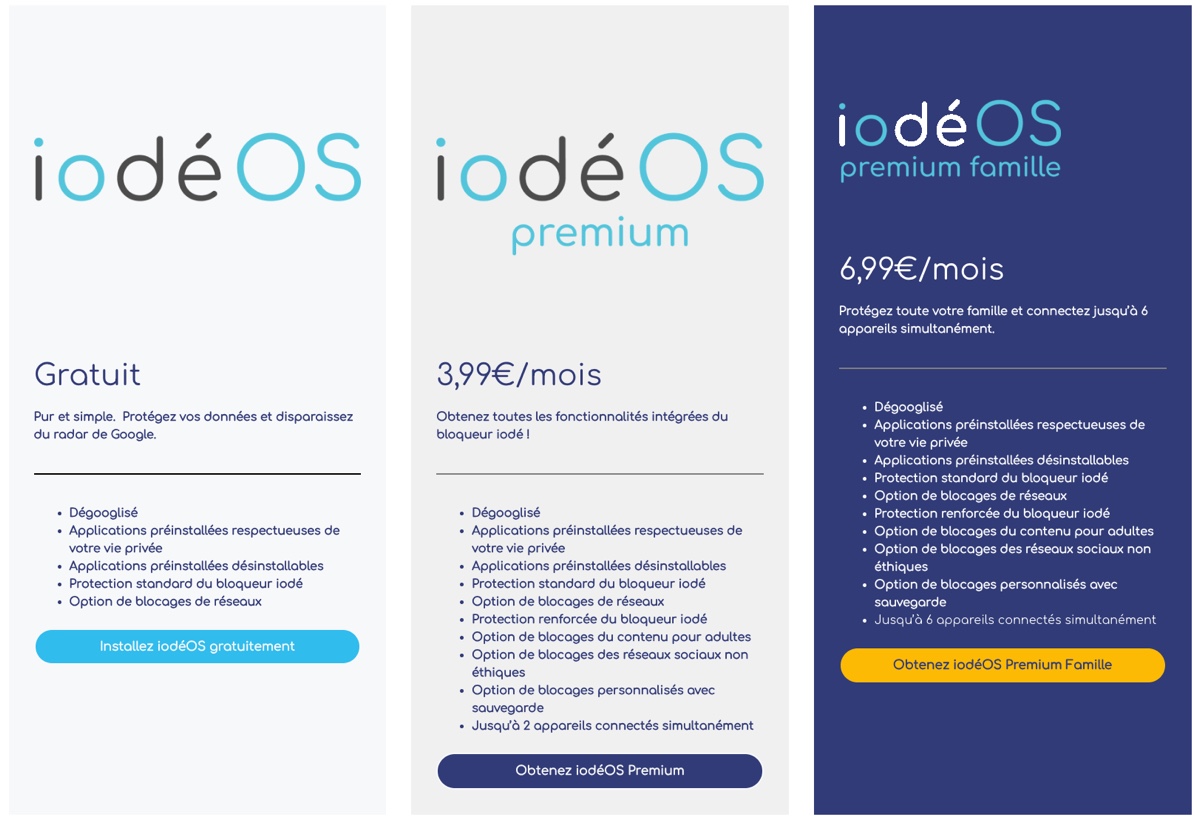
iodéOS is available in several plans. There is a free version and paid plans with subscriptions ranging from 3.99 euros to 6.99 euros per month. This provides additional features and, above all, allows the same subscription to be used on multiple devices (between 2 and 6).
In the mobile operating system market focused on privacy, GrapheneOS remains the benchmark when it comes to a hardened system, but iodéOS is an interesting alternative and may be better suited to the general public. It all depends on where you want to draw the line between security and features.
If some of you have already tried it, we would love to hear your feedback in the comments.