www.it-connect.fr

How a 9-Year-Old Ended Up Spending $118,000 on YouTube Ads with His Dad’s Work Card
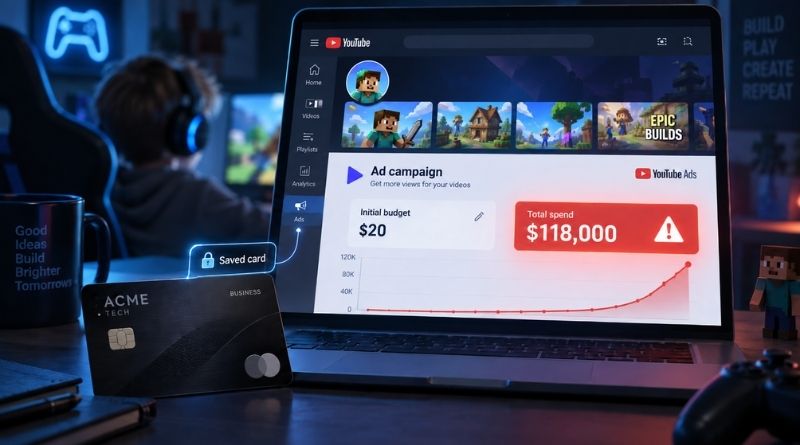
A $20 ad campaign to give his son's YouTube channel a boost. Nice move from dad to son. But three weeks later, the trouble started with a summons to his company's finance department over $118,000 in charges tied to a corporate card. That's the story told by an American father.
On Tuesday, September 15, 2026, the YouTube channel Mighty Mike Plays published a video titled Message from Dad...Mighty Mike Plays is Over. Mike, 9, usually posts his Minecraft and Roblox gameplay. This time, he hands the mic to his father, Dave, and it's not to thank viewers for supporting his son's videos.
Dave says he works in marketing for a large company, which he does not name. He says he was called into a meeting with his manager, representatives from headquarters, and members of the finance team. On the screen, a spreadsheet detailed three weeks of ad spending charged to the company card assigned to him. Total: $118,000. All of it with campaign names and video titles pointing to his son's channel.
He says he does not know whether he will keep his job, or whether he will have to repay all or part of the amount. In any case, this story is a good reminder of a few best practices.
A company card left saved in the Google account
How did this father end up here? He has to admit he made several mistakes:
- First mistake: to buy Robux for his son (the virtual currency used in Roblox), Dave used his company card. The card stayed saved in the Google account used by the child, and was then available for later purchases. Since when do you use a work card for that?
- Second mistake: a few weeks later, Mike complains that his channel is getting too few views. His father then creates a small ad campaign worth about $20 in front of him, explaining the different steps. It is true that a 9-year-old needs to know how to set up a YouTube ad campaign...
$20 worth of YouTube ads does not go very far. Mike probably realized that: once the budget was spent, he appears to have launched his own campaigns, then others, with no spending cap to stop him. "The logic was simple, I guess. More money, more views.", his father summarizes. And he adds: "This nine-year-old literally ransacked my company card".
An unverifiable story, but very real ads
Should we believe it? I did not take the time to verify anything, but CreatorDB analyzed Mike's channel using public YouTube data collected on September 16, 2026. Here are that publisher's findings:
- Three standout videos: the channel has published 181 videos since August 7, 2026. Three Minecraft videos, including one that runs 34 minutes, have accumulated 689,828 views, while the rest of the videos lag far behind.
- Ads detected: on September 10, five days before the father's video, ads were indeed spotted on YouTube.
- The effect of the confession: the channel had 9,320 subscribers on September 14, and about 33,200 two days later. It now has more than 230,000 subscribers.
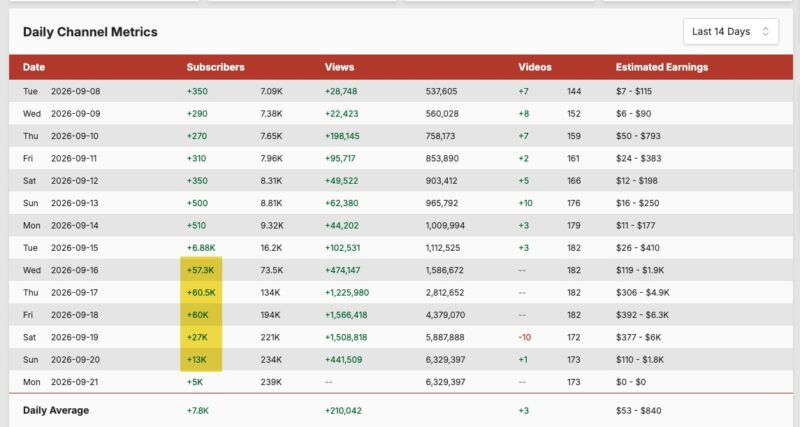
So yes, campaigns were indeed run. Their actual amount, however, remains unverifiable.
Bank cards: best practices to remember
True or embellished, this story highlights a very real issue: a bank card saved "to make life easier" becomes a permanent payment method, accessible to anyone using the session. A few simple rules can help prevent this scenario.
- Do not save your card in the browser: Chrome, Edge, or Firefox autofill is convenient, but the card then becomes usable by anyone in front of the screen, and it is among the data coveted by infostealers, those malware families whose operation I explained in a previous article. The best approach is to disable payment-method saving and delete any cards already stored.
- Clean up your accounts: Google, Apple, Amazon, PlayStation, Steam, Roblox accounts all keep cards once they are entered. Review saved payment methods and remove those that have no reason to be there.
- Use virtual cards: most banks offer virtual cards with one-time use or limited spending caps. This is the preferred solution for any online purchase, and even more so for an account shared with a child.
- Set limits and alerts: an online payment limit that matches your needs, plus a notification for each transaction, lets you spot abuse within hours instead of three weeks.
- Separate uses: a business card should only be used for business expenses. Also, for a child, a supervised account (Family Link on Google, Family Sharing on Apple) with parental approval for purchases avoids nasty surprises.
All of this could have been avoided... Consider yourself warned.