www.it-connect.fr

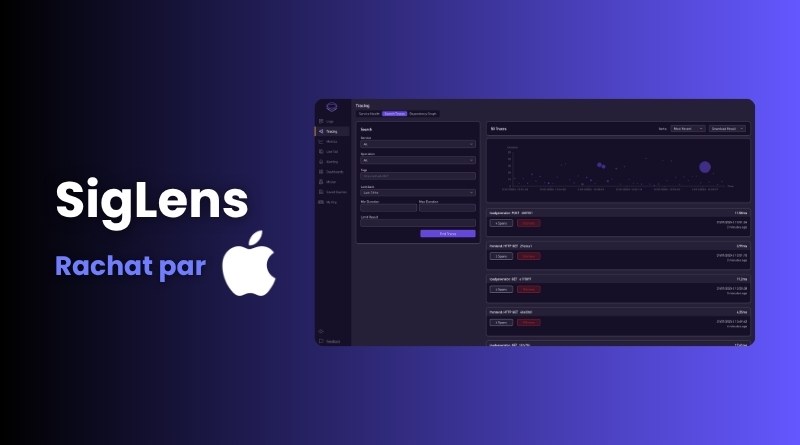
Apple Acquires SigLens, the Open Source Observability Tool Taking on Splunk
It positioned itself as an open source observability platform that could be up to 100 times more efficient than Splunk. SigLens, developed by the small company SigScalr, has just been acquired by Apple. The acquisition was not disclosed by the Cupertino company, but through a document published by the European Commission under the Digital Markets Act. So what exactly is this solution?
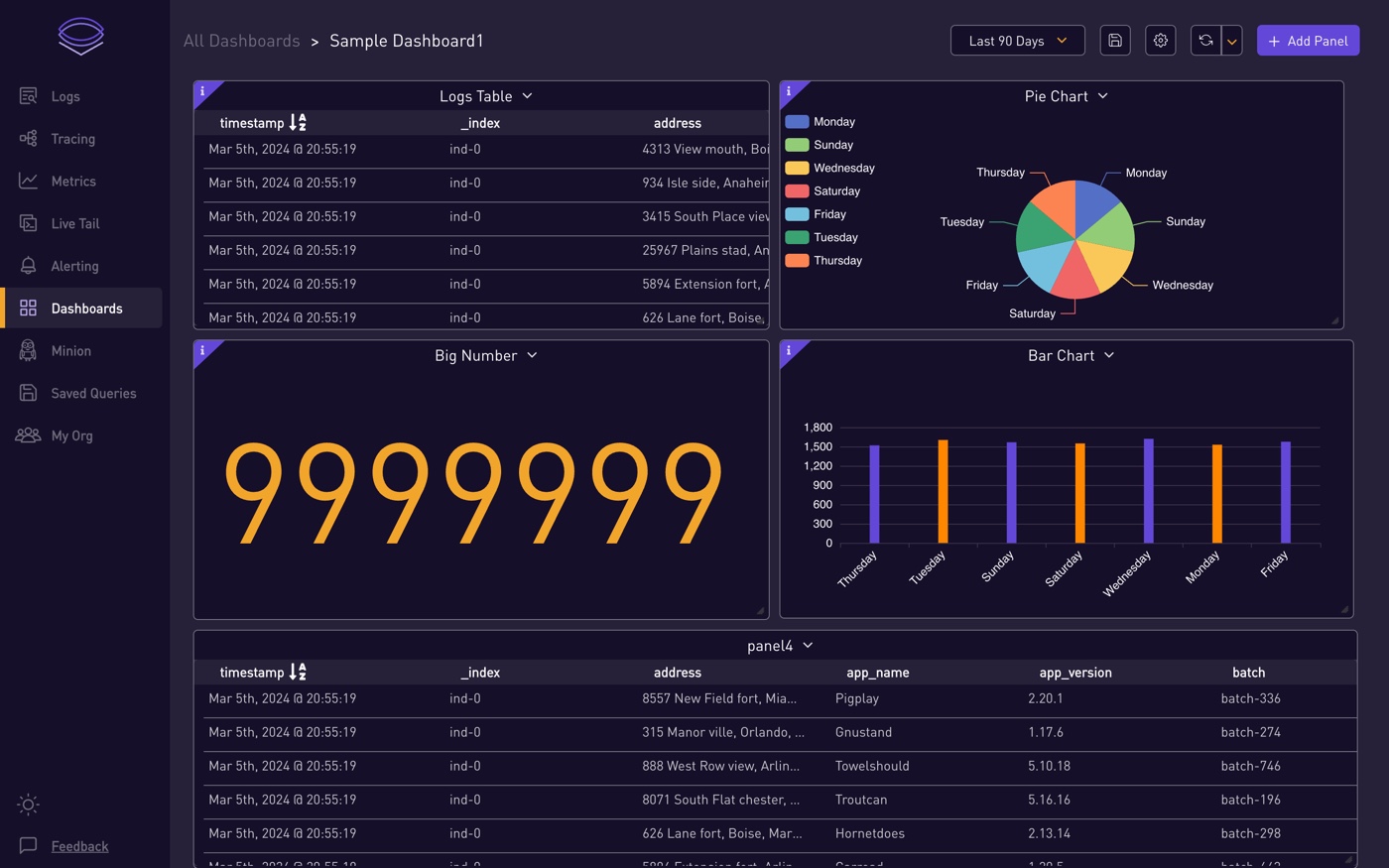
SigLens, an open source observability platform
SigLens is an open source observability platform. Observability — what does that mean? Some of you are probably asking that question. It refers to a tool capable of providing precise, end-to-end visibility into the state of an application infrastructure. It is a tool that can centralize logs, metrics, and traces within a single product, rather than juggling multiple solutions.
The advantage of SigLens is that it relies on a single binary, with no external dependencies, and can be run both on a workstation and on a production cluster. Despite this lightweight architecture, the SigLens engine is capable of ingesting very large volumes of data every day. The SigLens GitHub repository also claims efficiency up to 100 times greater than Splunk, as well as a reduction in observability costs of around 90%. These figures come from the vendor's own marketing, but if Apple invested in it, one can imagine there is some truth to them.
On the features side, the SigLens project highlighted several entry points compatible with the existing ecosystem:
- Multi-format ingestion, with support for OpenTelemetry, Elastic, Splunk HEC, and Loki.
- Multiple query languages, including Splunk's SPL and SQL.
- An architecture described as simple to deploy and designed to reduce maintenance.
SigScalr is a small company founded in 2021 by Kunal Nawale, a former Salesforce employee (2017 to 2021), where he worked on big data projects before specializing in application monitoring and observability. Based in Nashua, New Hampshire, the company also had operations in California, Montana, and India. The SigLens code was released as open source in 2024, after a development phase carried out behind closed doors.
An acquisition revealed by Europe rather than Apple
Apple did not issue a press release to mention the acquisition of SigSclar. It was the European Commission that disclosed this interesting news by publishing a summary of the transaction on its website. According to this document, Apple acquired certain SigScalr assets, as well as the ability to hire some of its employees.
This mechanism stems from the Digital Markets Act: notification to the European Union is mandatory for acquisitions that may affect European users. The Commission then publishes a summary of the deal, no earlier than four months after receiving the notification. In this case, the transaction was notified on March 12, 2026, and made public on July 13, 2026, which explains the gap between the signing of the agreement and its disclosure.

Several signs confirm that the project has indeed changed hands. SigScalr's official website has been shut down. More importantly, the SigLens GitHub repository was archived by its owners on March 12, 2026, precisely the day of the notification in Brussels! As if everything now makes sense, with real consistency between these different actions.
The SigLens project is now read-only, and its last released version is 1.0.57 from July 2025. In its archival message, the team thanked the community and announced a switch to an Apache 2.0 license, presented as more permissive, so that others could take over and continue evolving the code.
One question remains: what will Apple do with this technology? Neither Apple nor SigScalr has detailed what comes next. Given the nature of the tool, integration into Apple's internal development stack seems plausible. For the open source world, this is a real loss.
Open source alternatives do exist, but SigLens stood apart
Should we fear an observability gap in open source? No, the ecosystem is rich and several projects combine logs, metrics, and traces in a single product. Personally, I did not know SigLens, but it had a unique quality that is hard to find elsewhere, especially with its single binary, no external dependencies, while still being able to handle large amounts of data. That is how it stood out.
In the open source market, there are other interesting solutions, including:
- OpenObserve remains the closest technical alternative. Written in Rust and deployable as a single binary, it covers logs, metrics, and traces and positions itself as a rival to Datadog, Splunk, and Elasticsearch.
- SigNoz is probably the most complete unified option on the APM side, OpenTelemetry-native, but it relies on a ClickHouse backend and is deployed across multiple containers. This is clearly a departure from the single-binary model.
- VictoriaMetrics and VictoriaLogs come close to SigLens in philosophy (raw efficiency, permissive Apache 2.0 license), but remain organized into separate building blocks. On IT-Connect, we already covered monitoring with Grafana and VictoriaMetrics.
- The Grafana LGTM stack (Loki, Mimir, Tempo, Grafana) remains relevant, but it requires stacking multiple components to operate.
Did you know SigLens?