www.it-connect.fr

WordCraft, GridCraft, DeckCraft: After Adobe, Word, Excel and PowerPoint Rebuilt in Rust with AI
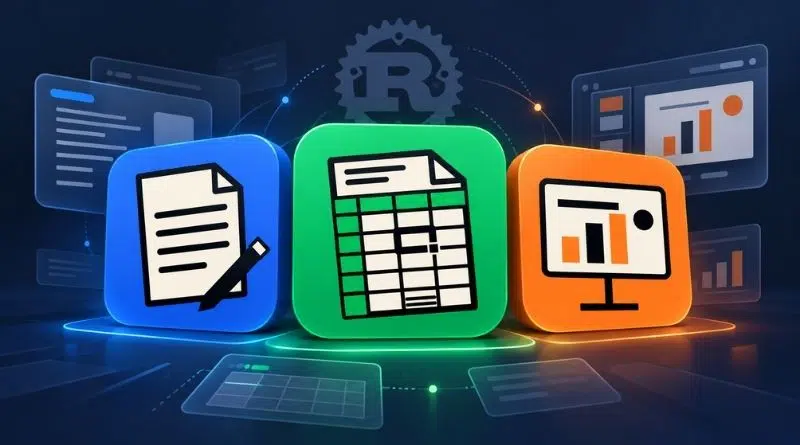
After Photoshop and Premiere Pro, it’s now Word, Excel, and PowerPoint’s turn. The developer behind ArtCraft has released WordCraft, GridCraft, and DeckCraft, three open source Office clones written in Rust with the help of Claude Opus 5.5.
At the beginning of October, I published an article about the Adobe suite rewritten in Rust by Claude Opus 5.5 agents, with seven open source applications such as PhotoCraft, FilmCraft, and LightCraft. The developer had already announced plans to take on Microsoft Office. Promise kept.
That developer is Brandon Thomas, a software engineer based in Atlanta. Former CEO of Storyteller.ai, he founded ArtCraft, an AI image and video studio. He also created open source Rust versions of Adobe suite applications, while stating that he wanted to tackle other applications as well. Now, alongside the Adobe apps, there are also Microsoft clones: Word, Excel, PowerPoint.
The approach is the same: a so-called clean-room reimplementation, written from public file format specifications and observation of the original software, with no Microsoft code. Here, he does not appear to be using REA (which you’ve probably heard about). The applications are free, licensed under MIT or Apache 2.0, and run on Windows, macOS, Linux, and FreeBSD. Yes, you read that right: a pseudo-Microsoft Office suite installable on Linux.
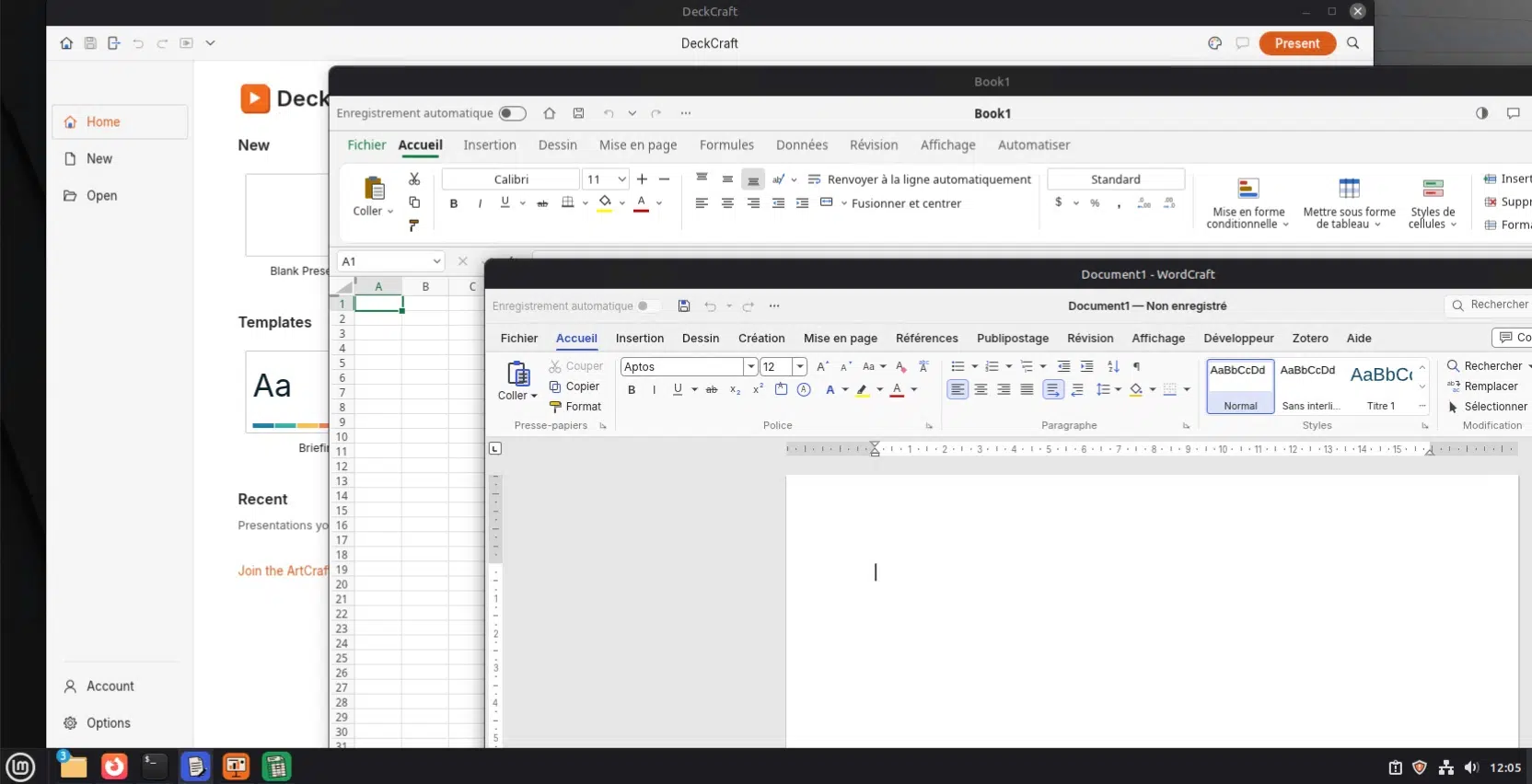
The Crafting Apps catalog now includes thirteen applications, including FigCraft for UI design and CADCraft for CAD.
Three clones, three levels of maturity
So where do WordCraft, GridCraft, and DeckCraft stand today? As with the Adobe applications, maturity varies from one app to another. It has to be said that on paper, Word is less complex than Excel, and that is confirmed:
- WordCraft : the Word clone reads and writes .docx, also opens ODT, RTF, Markdown, and legacy .doc files, and exports to PDF. Track changes, table of contents, bibliography, and mail merge are already there. The team claims 97% of ribbon commands, but estimates the tool is about 60% ready for real-world use.
- GridCraft : the Excel equivalent uses XLSX as its native format, handles 513 spreadsheet functions, pivot tables, and 17 chart types. It covers 89% of ribbon commands, for about 50% real maturity. VBA is out of scope, replaced by in-house scripts.
- DeckCraft : the PowerPoint clone opens and saves .pptx, supports transitions, animations, and presenter mode. It covers 84% of tracked features and the team estimates it is 55% ready.
In a few hours, these numbers may already be outdated, because the AI agents are hard at work developing these applications... It will be extremely interesting to see how these apps behave with real documents: Microsoft’s OOXML format is a bit of a minefield...
Having tested them, the outlook is once again very promising, because many features already work. It is also possible to open existing files, and in Excel, many elements are preserved: conditional formatting, formulas, colors, etc. Even if the overall formatting is not yet fully faithful to what Excel provides.
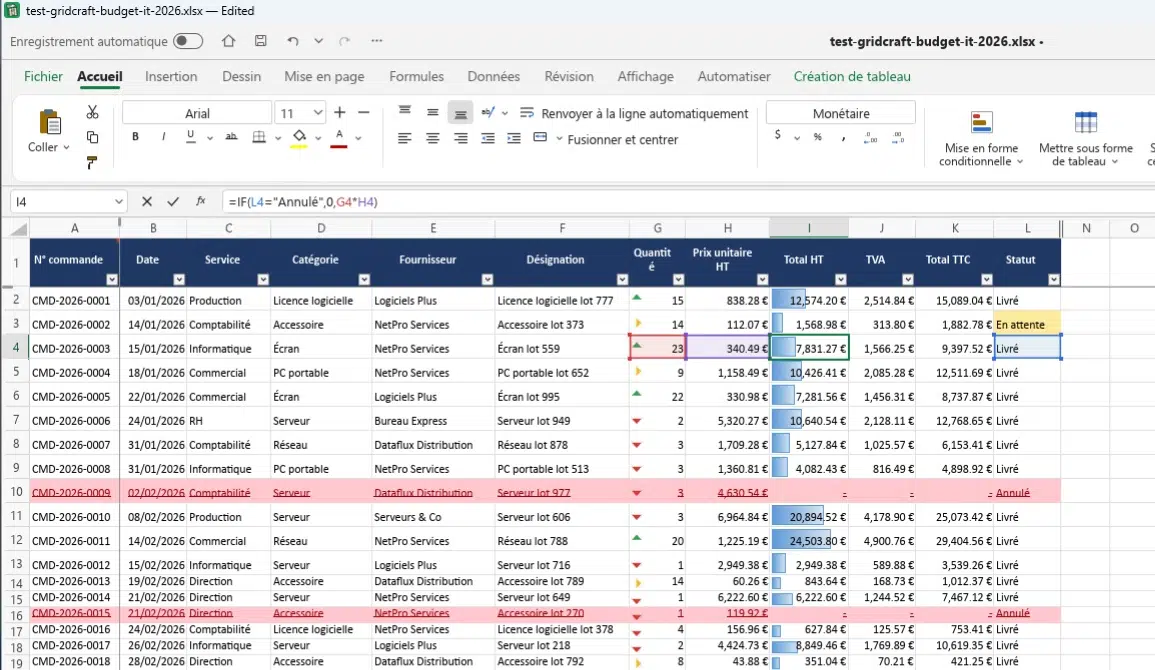
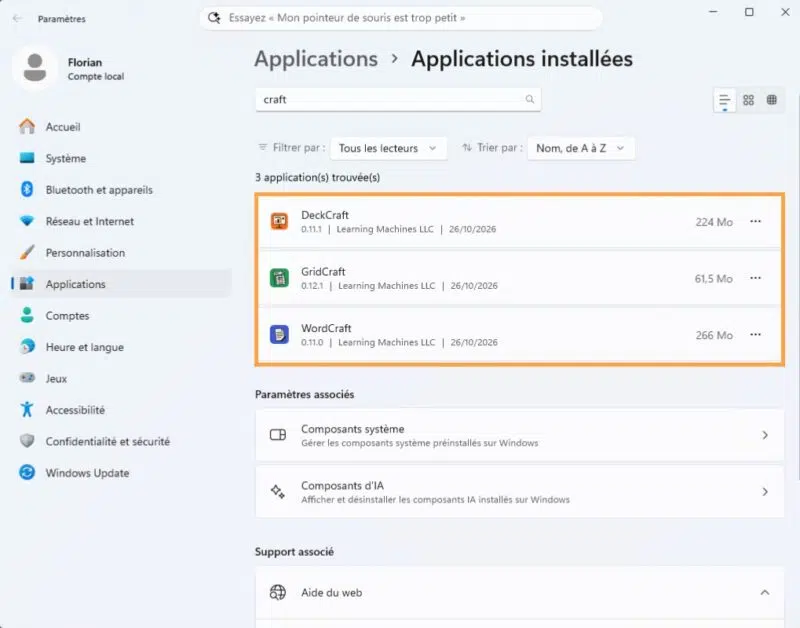
And above all, what I want to highlight is that these applications are very lightweight compared with Microsoft’s Office suite. You can see that right from installation, where it only takes a few seconds to install each application on a machine.
Claude at the controls for development
As with the Adobe clones, the use of AI is openly acknowledged. The three repositories include CLAUDE.md and AGENTS.md files, and GridCraft’s roadmap, dated October 7, estimated the remaining work in Claude Opus 5.5 agent-hours: about 35 hours to reach alpha, then an additional 180 hours for full parity with Excel. Every action is also available as a command-line command and through an MCP server: an AI agent can fill out a spreadsheet or format a report. That is also an interesting added value of these open source versions.
There is real demand from users, and that is already visible on GitHub: on October 26, 2026, WordCraft shows 16,100 GitHub stars, GridCraft 6,500, and DeckCraft 4,000.
One common question remains with projects like this: who will ensure long-term maintenance and vulnerability monitoring for these applications?