www.it-connect.fr

Bitwarden Moves App Store Builds to Commercial Licensing: What Changes for Users
Bitwarden apps available in stores are moving to a commercial license, while the GPLv3 version stays on GitHub. What does this change mean? Here's what you need to know.
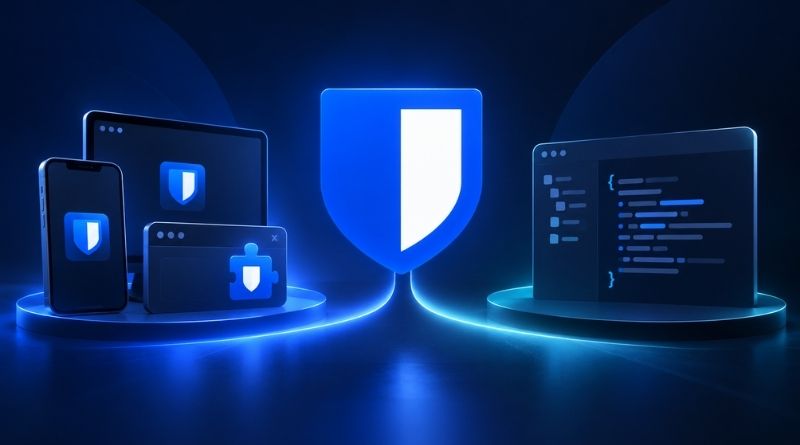
Bitwarden, the password manager known for its open source model, is changing how it distributes its applications. A new note titled Published version update in app stores on Bitwarden's community forum points to a significant shift: "Starting with the next release, the Bitwarden apps published on the various stores will be the commercial-licensed versions," it says.
To understand this, it helps to know that with each new release, Bitwarden builds two variants of its clients and publishes them on GitHub: one under a commercial license, the other under GPLv3. Until now, the GPLv3 variant was the one sent to the stores. That will no longer be the case.
Dual licensing itself is not new. The license file in the Bitwarden clients repository states that the code is covered either by GPL v3.0 or by the Bitwarden License v1.0, with the latter code grouped in a dedicated directory called bitwarden_license. What is changing is the build distributed through official channels.
What changes, and what does not
In the discussion that followed the announcement, Bitwarden clarified that direct downloads from its official website will also use the commercial license. So, in short:
- Affected apps: mobile apps (Google Play, App Store), browser extensions published in browser stores, and apps downloaded from bitwarden.com will be under a commercial license.
- Existing users: no action is required. The apps work as they do today, and all current features remain available in both versions, including the free plan.
- Source code: the GPLv3 version will continue to be developed and published on GitHub. The commercial-licensed code will also remain viewable, but without the same rights to modify or redistribute it.
- Self-hosting: Bitwarden says there is no change for self-hosting. When asked about Vaultwarden, the vendor replied that third-party community servers can continue choosing which features they support.
The real issue is what comes next. And the announcement makes that clear: "Some future components will be released under the commercial license and will exist only in that version." Bitwarden explains that each new feature will be evaluated on a case-by-case basis to determine its license. That means the two versions are very likely to diverge over time.
"New enterprise features, new products, and other elements that give Bitwarden a strategic competitive advantage in new markets will fall under the commercial license. In most cases, this will apply only to paid business plans." As license changes go, this is far from trivial.
A scenario mentioned back in 2024
In October 2024, a GitHub issue titled Desktop version 2024.10.0 is no longer free software had already sparked controversy: the desktop client build depended on a SDK whose license prohibited use with software other than Bitwarden. The vendor first called it a packaging bug, then placed that internal SDK under GPL.
Earlier this year, it is also worth noting that the individual Premium subscription almost doubled, rising from $10 to $19.80 per year. It certainly looks like Bitwarden has chosen a more commercial direction.
From now on, if you want a free software version, you will need to download the GPLv3 builds from GitHub and install them manually, without the automatic updates provided by the stores. Because on the stores, it will be the commercial versions. On mobile and for a browser extension, that is not exactly convenient...